



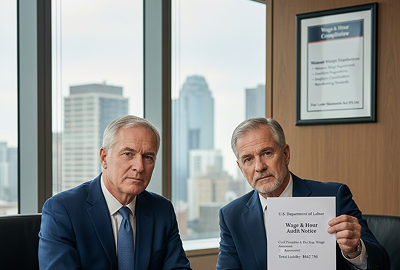
One of the most overlooked triggers for a DOL audit is failure to display current labor law posters. A current federal labor law poster is the single most important compliance signal during a DOL audit. We have seen in recent years that the U.S. Department of Labor (DOL) has increased its enforcement efforts, and in the fiscal year 2025, we see that the Wage and Hour Division (WHD) of the Department of Labor has recovered more than $259 million in back wages for workers, representing 176,957. These numbers represent a significant increase in enforcement activity by the Department of Labor.
We also see that people have a perception that an audit will happen in only some of the specific industry but it is not true. Many employers think that they have correct payroll and wage practices and are compliant with the law, but when there is any complaint or any investigation, and when a Dol Audit happens, it eventually comes out that they are not complying with the required law, and due to this, they have to pay certain fines, back pay, and other penalties. Outsourcing posting compliance to professional labor law compliance services reduces audit exposure and saves staff time. They may face other legal consequences as well, so it is important to stay up to date with labor law compliance and post required notices such as the minimum wage rate by state, as it is one of the key indicators and investigators review this as a first area of their audit process. Apart from the financial consequences of non-compliance, there are also some other consequences, such as liquidation, which can double the liability of an employer, and therefore, it is important to know about the full audit process, what the potential penalties and findings are, and how one can prepare themselves before the audit notice arrives at their door.
What Is a DOL Audit?
It is important to know what exactly the Department of Labor Audit does. This audit is an official investigation that is conducted to make sure that employers are following the labor laws. The audit examines certain practices such as correct wage and hour pay, workplace safety standards, and equal employment requirements. There are some Industries where this audit occurs frequently because they may have a violation history or they come under a particular industry type in which audit occurs more frequently, such as restaurants, food services, construction, health care, retail, hospital, and home care services. It is not like that if you belong to this particular industry, then only you are eligible for a DOL Audit, but an audit can happen to any employer, regardless of the size and industries
Agencies That Conduct Audits
There are mainly three doll agencies that conduct workplace audits. These are as follows:
- The first agency is the Wage and Hour Division (WHD), the Wage and Hour Division investigates compliance according to the Fair Labour Standards Act (FLSA), which includes topics such as minimum wage, overtime, child labour, and record-keeping requirements. The Wage and our division conducts the majority of the Department of Labor audit, which affects the general employers
- The second agency is the Occupational Safety and Health Administration (OSHA), also known as OSHA. It generally inspects workplace safety conditions and investigates whether that some in accidents or any workplace hazards. It also targets industries that have a high injury rate.
- Another agency is the Office of Federal Contract Compliance Programs (OFCCP), they audit Federal contractors and subcontractors for compliance with equal employment opportunity.
The Differences Between DOL Audits and Other Inspections
Sometimes employers may get confused between a General audit and a Department of Labor Audit, so it is important to know the difference between the DOL Audit and other inspections. A DOL audit differs from other general audits as it conducts a formal investigation with legal authority to review records, interview employee and impose penalties for violation while other general audit primary focus on physical hazards, wage and hour practices, or examine payroll system classification decisions and time keeping practices.
What Triggers a DOL Audit?
It is important to understand what causes a DOL audit, as it will help employers identify and address vulnerabilities before they attract unwanted attention.
- Employee Complaints
Employee complaints are among the most common reasons that trigger a DOL investigation. Any current or former employee can file a complaint (anonymously if they’d like) with the WHD regarding proper wages, overtime, or breaks if they believe the employer is not following current laws and regulations. The agency is required to investigate all credible complaints.
- Enforcement Initiatives
The DOL conducts random and targeted audits as part of its enforcement routine. More commonly, the agency launches targeted enforcement initiatives focusing on specific industries, geographic regions, or types of violations. Recent initiatives have focused on construction, healthcare staffing, and gig economy employers.
- Industry-Specific Enforcement Priorities
Certain industries remain under continuous scrutiny. The WHD maintains ongoing enforcement efforts in low-wage sectors where violations are statistically more prevalent. If you operate in one of these industries, your audit risk increases regardless of your actual compliance status.
- Payroll & Overtime
Specific payroll patterns can trigger a closer examination by the DOL. These include unusually high percentages of workers classified as exempt from overtime, extensive use of independent contractors, employees consistently working over 40 hours without overtime pay, and significant numbers of workers paid at or near minimum wage.
- Prior or Repeated Violations
Employers with previous violations also face substantially higher audit risk. The DOL maintains comprehensive records of past investigations and prioritizes repeat offenders for follow-up audits. Even violations that were resolved years ago can influence future audit selection.
What Happens During a DOL Audit
| Steps | Description |
|---|---|
| Audit Initiation & Authority | The DOL’s Office of Inspector General (OIG) initiates or oversees an audit under federal law. Auditors are authorized to access all records, systems, and information related to the audit. |
| Audit Notification | In most cases, the business is informed in writing before the audit begins. In some situations, the audit may start without prior notice. |
| Entrance Conference | Auditors meet with management to explain the purpose of the audit, the areas being reviewed, the timeline, and the information needed. A main point of contact and workspace at the business for auditors is also identified. |
| Preliminary Review | Auditors collect background information about the program or operation, including objectives, funding, responsibilities, and internal controls. |
| Audit Planning | Based on the preliminary review, auditors design a detailed audit plan that outlines how the review will be conducted and what areas will be tested. |
| Fieldwork & Testing | Auditors examine records, interview staff, observe operations, and test compliance with laws, regulations, and policies. |
| Ongoing Communication | As issues are identified, auditors discuss them with management through meetings or briefings to confirm facts and prevent misunderstandings. |
| Exit Conference | Auditors present preliminary findings and recommendations to management and allow management to provide explanations, corrections, or additional context. |
| Draft Audit Report | A draft report is prepared outlining findings and recommended corrective actions. Management is asked to submit a written response within a specified timeframe. |
| Final Audit Report | After reviewing management’s response, the OIG issues the final audit report, which includes conclusions, recommendations, and management’s official comments. |
| Audit Resolution | The DOL and OIG agree on the corrective actions to convey the findings. Audit recommendations must generally be resolved within 180 days. |
| Corrective Action & Closure | Management implements agreed-upon corrective actions. Once actions are completed and verified, the audit is officially closed. |
| Congressional Reporting | Significant audit results and unresolved issues are summarized in the OIG’s semiannual report to the U.S. Congress. |
How Expensive Can a DOL Audit Get?
It is important to understand the potential costs and audit penalties a business can face if tit isfound to be violating required labor laws. In the event of any nonpayment of back wages, the DOL can sue employers for any underpayments discovered and require liquidated damages equal to the back wages owed. Civil monetary penalties can also be levied for specific violations, and businesses can also face high legal and administrative costs. The total cost, however, will depend on the type and extent of the violations, such as:
- Number of affected employees
- Investigation period covered
- Whether violations appear willful or non-willful
- Employer's history of previous violations.
Back wages often represent the most expensive fines when it comes to an audit. If an investigator finds you underpaid employees, you must pay the full difference between what workers should have received and what they actually received, as well as other penalties for the nonpayment of wages. The potential civil penalties for any DOL audit violations are as follows:
| Violation Type | What the Violation Involves | Potential Penalties |
|---|---|---|
| Failure to File Required Benefit Reports | Not filing, or filing incomplete or rejected annual benefit plan reports required under the Employee Retirement Income Security Act of 1974 (ERISA). | Civil penalties may be assessed and increase the longer the violation remains uncorrected. |
| Failure to Provide Required Participant Notices | Not providing required notices to employees or beneficiaries, such as blackout period notices for retirement plans. | Penalties may be assessed per affected participant, causing costs to rise quickly. |
| Wage and Hour Violations (Under the FLSA) | Failure to pay minimum wage and overtime requirements; commit child labor violations; or conduct inadequate payroll recordkeeping. | Penalties range from thousands to over $145,000 per violation, with higher amounts for willful or repeat violations. |
| Workplace Safety Violations (Under OSHA’s OSH Act) | Unsafe working conditions; failure to follow safety standards; or failure to correct known hazards. | Penalties can exceed $165,514 per willful or repeated violation, plus daily penalties for uncorrected hazards. |
| Posting and Notice Violations | Failure to display required employee rights notices. | Costs increase when violations occur across multiple worksites. |
| Failure to Cooperate With a DOL Audit | Obstructing an investigation, failing to provide records, or interfering with DOL officials. | Additional penalties may apply on top of other assessed violations. |
Common Reasons for DOL Audits
There is one question which every employer think which is why a DOL Audit happens and when it can happen so there are certain situation due to which a DOL Audit can be happen, their may be certain violation that appear repeatedly in DOL investigation and due to which an audit happens, so understanding this common reasons help employers to understand how to avoid audits and make themselves compliance with the law so that they should not have to pay heavy fine and penalty which they may face during and audit.
- The first and most important reason for a DOL audit is misclassification of employees. There is a lot of time that employer misclassified its employees, such as misclassifying non-exempt employees as exempt, treating workers as independent contractors when they should be classified as employees, and this may represent one of the most expensive errors employers make. The FLSA establishes a specific test for exemption status. Employers should follow this exemption status test because just paying the salary and giving an employee a particular tag does not qualify them as an exempt employee.
- The second reason for an audit is basically failing to pay the correct minimum wage and overtime wages. It is important for employers to pay at least the federal minimum wage of $7.25 per hour, or if the state has the highest state minimum waves they should follow that as well. The most common wage violations involve is improperty wage deductions, pay below the minimum wage, and ask employed to work after working hour. Therefore, employers should avoid such kind of practices because they can lead to an audit if there is a complaint or investigation.
- There is one more reason for an audit, which is missing payroll records or having inaccurate payroll records. The FLSA requires employees to maintain specific payroll records for at least 3 years. When employees are not able to produce these records, investigators reconstruct the working hours and wages owed using employees' testimony and any available partial records, so this reconstruction typically favours the employee and can result in a high assessment; therefore, it is important to have an updated and correct record.
How to Prepare for a DOL Audit Before It Happens
Proactive compliance measures significantly reduce audit risk and minimize costs if an investigation does occur. Employers who invest in prevention save substantially compared to those who address compliance only after receiving an audit notice.
- Conducting Internal Wage and Hour Audits
Regular internal audits help identify and correct issues before the DOL discovers them. A thorough internal audit should review
- All employee classifications for proper exemption status
- Verify independent contractors meet legal tests for that classification
- Confirm all non-exempt employees receive overtime for hours over 40 per week
- Check that minimum wage applies to all hours worked, including pre-shift and post-shift activities.
- Ensure rest and meal breaks comply with applicable state laws.
Document your audit process and findings. If you discover violations during a self-audit and promptly correct them, this demonstrates “good faith” that can help limit penalties in future investigations. Consider conducting internal audits annually or whenever you make significant changes to your workforce structure or compensation systems. Our labor law compliance training helps HR teams and managers understand what investigators look for so your next audit is manageable.
- Keeping Payroll Accurate
For better compliance, it is always said to keep an accurate timekeeping system. It can be done by implementing a system that can capture all hours work including the time before and after the scheduled shifts. Also, the supervisor should review and approve time records each pay period and prevent any automatic deductions for the meal breaks unless they are verified. One more thing which is important is to train employees on proper time recording procedure, so it is important to make clear that working off the clock is not accepted and it's prohibited, and that employees must record all time worked accurately.
- Training HR and Managers on Compliance Basics
Front-line managers make daily decisions affecting wage and hour compliance. They approve schedules, oversee timekeeping, and often make initial classification recommendations. Inadequate training for these managers creates compliance vulnerabilities. Training should cover basic FLSA requirements, including minimum wage and overtime rules, proper classification of exempt versus non-exempt employees, when to count time as hours worked, prohibited deductions from wages, child labor restrictions, and recordkeeping requirements.
- Staying Current with Labor Law Updates
Wage and hour laws change regularly. The federal minimum wage for tipped employees, overtime exemption salary thresholds, and civil penalty amounts adjust periodically. State and local laws change even more frequently, with many jurisdictions enacting their own minimum wages, paid leave requirements, and scheduling regulations. Employers who fail to display current state and federal labor law posters or ignore recent labor law poster updates may draw additional scrutiny during an investigation, especially if other compliance issues are present.
Conclusion
A DOL audit can be disruptive, time-consuming, and extremely expensive if violations are found. With enforcement activity increasing and DOL penalties reaching as high as six figures per violation, employers can no longer assume they are compliant. Back wages, liquidated damages, civil fines, and legal costs can quickly add up and seriously affect a business’s financial stability. Preparing in advance through internal audits, accurate payroll systems, using a labor law poster service, and performing required compliance training are the most effective ways to reduce risk and control costs before a DOL audit occurs.
FAQs
How much are Department of Labor (DOL) penalties?
DOL penalties depend on the type and severity of violations found during an audit. Employers may owe back wages, liquidated damages equal to unpaid wages, and additional civil monetary penalties. Wage and hour violations can exceed $145,000 per violation, while workplace safety violations can exceed $165,514 for willful or repeat offenses. Total costs, however, will increase if there is a large number of employees affected or the investigation period takes longer than usual.