



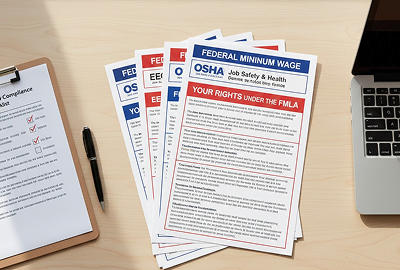
Starting a new venture comes with plenty of paperwork and rules, and labor law posters may seem like the least of your worries. Many entrepreneurs assume these notices are only for factories or corporate towers. In reality, once you put even one employee on the payroll, federal and state agencies expect you to display certain small business labor law posters in a conspicuous place. Failure to comply can lead to fines or even employee lawsuits. This guide breaks down why small businesses need posters and which notices apply when you have 1–10 employees.
Do Small Businesses Need Posters? Yes — Here's Why
If you operate as a one‑person entity with no employees or contractors, you’re off the hook. As soon as you hire your first employee (even part‑time or temporary), you must display all applicable federal and state labor law notices. These posters for small employers inform workers of their rights regarding minimum wage, overtime, anti‑discrimination, workplace safety, and more. Agencies like the Department of Labor (DOL) require employers to keep posters current; missing or outdated notices can result in penalties.
Beyond the legal risk, posting employee rights shows you take startup compliance seriously. It can also protect your small business in the event of an employee dispute. When workers understand the rules, they’re less likely to claim ignorance about overtime, family leave, or anti‑harassment policies. For small businesses, subscribing to a labor law poster service is more cost-effective than tracking changes in-house.
Required Posters for Employers With 1–10 Employees
The exact posters you need depend on your industry, location, and size. However, most small employers must display the following notices:
- Federal Posters
- Fair Labor Standards Act (FLSA) – Minimum Wage – Every employer subject to the FLSA must post this notice.
- Occupational Safety and Health Act (OSHA) – Private employers engaged in commerce must display the “Job Safety and Health: It’s the Law” poster.
- Equal Employment Opportunity (EEO) – This notice describes anti‑discrimination laws, including Title VII of the Civil Rights Act, the Americans with Disabilities Act(ADA), and the Age Discrimination in Employment Act (ADEA).
- Employee Polygraph Protection Act (EPPA) – Advises employees about lie‑detector protections; required for most private employers.
- Uniformed Services Employment and Reemployment Rights Act (USERRA) – Protects military service members’ job rights; must be provided to employees, but can be delivered electronically.
Some posters apply only when you reach specific thresholds. For example, the Family and Medical Leave Act (FMLA) poster is required when you employ 50 or more workers. Many states also have minimum wage, paid leave, workers’ compensation, and anti‑harassment notices; contact your state labor department or use the DOL’s Poster Advisor to find your requirements.
- Industry‑Specific Posters
- Home Office – If you operate from home and have employees working remotely, you still need to ensure they receive the same information. The DOL recommends electronic postings; employees must have easy digital access, and employers should regularly communicate electronically. You might email PDF posters or host them on your company intranet.
- Retail Shop – Brick‑and‑mortar stores must post notices in a common area like a break room, employee entrance, or near the time clock. The posters should be large enough to read. State‑specific posters should be posted alongside federal notices.
- Local and Industry Add‑Ons
Certain cities and states have their own posting requirements. For instance, New York and Illinois require digital labor law posters for remote employees. Industries like construction, agriculture, and healthcare have specialized notices, such as hazard communication or migrant worker rights. Always verify state and local rules to ensure complete compliance.
Home Office vs Retail vs Office Compliance Differences
The main compliance difference lies in how employees access the notices. A traditional office or retail shop can hang posters on a wall where all staff pass by; a home‑based startup with remote employees cannot. In 2021, the DOL issued guidance allowing electronic posting for specific laws (FLSA, FMLA, EPPA, and the Service Contract Act) under certain conditions:
- Easy Access – Employees must be able to access digital posters without requesting permission.
- Regular Communication – Employers should routinely use electronic channels to communicate, such as email or intranet.
- Applicable Notices – Employees must be able to determine which posters apply to them.
For remote or hybrid teams, send the notices by email, provide a link to a secure portal, or upload them to your HR platform. If employees occasionally visit a company office, display physical posters there as well.
Common Compliance Mistakes Small Businesses Make
- Thinking they’re exempt – Many owners assume posters are only for companies with dozens of employees. In reality, the presence of a single employee triggers the requirement.
- Posting outdated materials – Laws change frequently. The FLSA and OSHA posters have been revised, and state minimum wage and paid leave rules update often updated. Sign up for update services or set calendar reminders to check for new posters several times a year.
- Ignoring language needs – If part of your workforce isn’t proficient in English, you must provide notices in a language they understand. Many posters are available in Spanish and other languages.
- Forgetting remote employees – Remote workers must have digital access to posters. Some states require electronic distribution.
- Improper placement – Posters should be in a conspicuous location. Tucking them into a binder or behind a filing cabinet doesn’t meet the requirement.
- Missing state or local notices – Employers often post federal notices but overlook state, county, or city posters. Check your state labor department for a list of required notices.
Startup‑Friendly Checklist
To stay compliant without losing your mind, use this quick checklist. These items are short and actionable to help new business owners get started:
- Identify poster requirements: Use the DOL’s Poster Advisor and your state labor department to see which federal and state posters apply.
- Print or obtain posters: Download free posters from government sites or order an all‑in‑one set.
- Choose a display location: Hang posters in a break room, near the time clock, or another area employees frequent.
- Provide digital access: Email or upload digital posters for remote workers.
- Check language versions: Ensure posters are available in languages your employees speak.
- Monitor updates: Set reminders to check for updates quarterly or subscribe to a poster service.
- Document compliance: Keep records of posting dates and digital communications for your files.
Employer Takeaways
As a small business owner, you already juggle payroll, taxes, marketing, and more. Labor law posters might feel like busywork, but they serve an important purpose. By taking a few minutes to determine which federal and state notices apply, printing or ordering the right posters, and ensuring both on-site and remote employees can see them, you protect your business and support your team.
FAQs
Do small businesses need labor law posters?
If you have even one employee on your payroll, yes. Federal laws like the Fair Labor Standards Act (FLSA) require minimum wage and overtime notices, and your state may require additional posters for paid leave, workers’ compensation, or anti‑discrimination.