



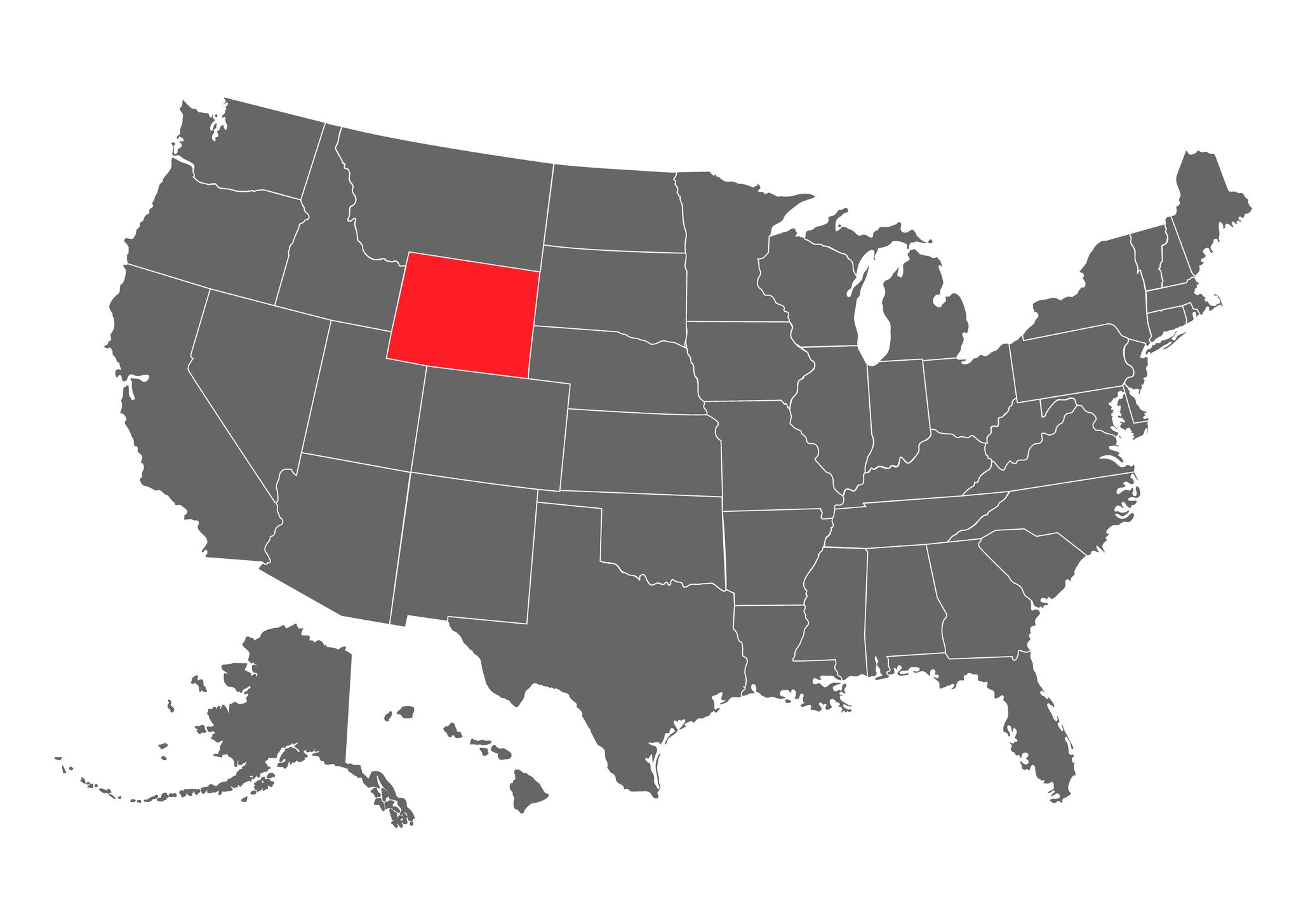
Overview of Wyoming Employment Laws
All employers operating in Wyoming must comply with applicable Wyoming employment laws, as well as federal standards enforced by agencies like the U.S. Department of Labor (USDOL) and the Equal Employment Opportunity Commission (EEOC). State government agencies such as the Wyoming Department of Workforce Services (DWS) help enforce state labor standards and workplace regulations. Private compliance service providers, such as Labor Law Posters-Online, can assist Wyoming employers in complying with workplace regulations. The information below details the key aspects of Wyoming state employment laws.
Wyoming's labor and employment laws apply to all workers performing their job within the state and to employers operating in Wyoming, although specific exemptions and thresholds may limit the scope of coverage. For example, the federal Family and Medical Leave Act (FMLA) requirements for unpaid job-protected leave typically apply only to employers with 50 or more employees within a 75-mile radius.
Hiring and Employment Practices
When hiring employees, Wyoming businesses must comply with applicable state and federal anti-discrimination laws, including the Wyoming Fair Employment Practices Act of 1965. Employers should do all of the following:
- Ensure that hiring decisions do not negatively impact a protected class of workers.
- Prohibit questions regarding protected characteristics, including race, religion, gender, disability, age, pregnancy, or national origin during interviews.
- Focus on job-related skills and experience only.
Wyoming employees are presumed to be employed "at-will," meaning that the employer can terminate the individual at any time for any lawful reason. Employers should clearly articulate policies but avoid termination decisions based on protected characteristics.
Federal and state laws require businesses to report any newly hired and rehired W-2 employees in Wyoming to the Wyoming New Hire Reporting Center. Employers can submit these new hire reports online or use the state's designated new hire reporting form.
In addition to mandatory new hire reporting requirements, other mandatory hiring and onboarding forms require completion by both the employer and the worker. These essential forms include:
- Form I-9 (Employment Eligibility Form)
- Form W-4 (Employee Withholding Allowances Certificate)
Wage and Hour Laws
Minimum Wage
There is no state-specific minimum wage law in Wyoming. The state follows the current federal minimum wage rate of $7.25 per hour. Employers can also pay a youth wage rate of $4.25 per hour for workers under 20 years old for their first 90 days.
Overtime Rules
Workers in Wyoming must receive one and a half times their regular pay for any work performed over 40 hours in a week, as required by the federal Fair Labor Standards Act (FLSA). Wyoming adds daily overtime for public works employees who work more than eight hours in a day.
Exempt vs Non-Exempt
Employees can qualify as exempt from overtime pay if they are paid on a salary basis and their job duties fit the criteria defined under the FLSA. Exempt employees (executive, administrative, professional, highly compensated, and outside sales employees) do not receive overtime pay. Non-exempt hourly employees must receive the overtime rate of one and a half times their regular rate of pay when working more than 40 hours in a week.
Pay Frequency & Methods
Most industries have no state-mandated pay frequency. Some specific sectors (e.g., mining) may require bi-monthly pay. Employers should maintain consistent and lawful payroll practices with regularly scheduled paydays.
Breaks
Wyoming does not mandate meal or rest breaks. If provided, rest breaks under 20 minutes are considered paid time. Meal periods may be unpaid if the employee is fully relieved from their job duties during such period.
Employee Classification
Employee vs Independent Contractor
Classifying workers correctly is critical to ensuring compliance with various laws and regulations. Employers must correctly determine whether the worker qualifies as an employee or an independent contractor. Subsequently, employers must correctly determine whether an employee qualifies as exempt or non-exempt from overtime pay to comply with FLSA overtime requirements. Misclassification can lead to unpaid overtime claims, back taxes, and penalties.
Misclassification Penalties & Tests
Misclassification of employees as independent contractors can result in back pay, taxes, interest, and fines from the U.S. Department of Labor or the IRS. Wyoming defines "independent contractor" using a three-part statutory test, which appears in both the Unemployment Insurance law and Workers’ Compensation statutes.
To qualify as an independent contractor in Wyoming, a worker must:
- Be free from control or direction over the details of performing the services, both under the contract and in actual practice;
- Represent their services to the public as a self-employed individual or independent business, rather than as an employee; and
- Be permitted to substitute another person to perform their services.
Workplace Safety and OSHA Compliance
Wyoming operates an approved state OSHA plan through the DWS, covering industries such as construction, agriculture, and manufacturing. Employers must:
- Provide employees with a workplace that is free from recognized hazards.
- Refrain from retaliation against an employee for exercising any of their rights under the law, including raising a safety concern or reporting a work-related injury or illness.
- Comply with all applicable OSHA standards.
- Provide required safety training in a language and vocabulary all workers can understand.
- Display the required Wyoming OSHA poster where employees can view it.
- Post any state OSHA citations at or near the place of the alleged violations for a minimum of 3 days or until all the citations are abated.
Worker’s Compensation
Most employers must obtain workers’ compensation insurance via the DWS. Specifically, workers’ compensation insurance is required for “extra hazardous industries” under Wyoming law, while lower-hazard businesses can opt in voluntarily. Wyoming statutes do not provide a comprehensive list of "extra hazardous" industries, as the term applies to industries with the highest injury and illness rates based on the latest data.
To maintain insurance coverage, employers must register with the state, track premiums, and ensure timely claims handling. When a worker reports a job-related injury, the employer must provide them with the required “Wyoming Report of Injury” form or provide information on where the employee can obtain the form online.
In Wyoming, under W.S. §27-14-104, employers who carry Workers’ Compensation coverage (whether required to or opting in voluntarily) through the State of Wyoming Workers’ Compensation Fund are protected from being sued by an employee for a workplace injury. As such, if a worker is injured on the job and has a valid claim, they cannot take legal action against their employer related to that injury.
Insurance & Benefits
Employer registration with the DWS includes automatic enrollment in workers’ compensation and unemployment insurance accounts. Premium amounts rely on experience ratings. When employees make claims, DWS processes medical and wage replacement benefits.
Wyoming’s Unemployment Insurance (UI) program is a state-managed program that offers temporary financial assistance to eligible Wyoming workers who are unemployed through no fault of their own. These post-employment benefits are funded entirely by employer contributions to the unemployment insurance trust fund.
Leave Laws and Time Off
Paid Sick Leave & PTO
Unlike other states, Wyoming does not enforce any state-mandated paid sick leave or paid time off. Employers may offer these benefits voluntarily as part of their company’s policies or employee handbook.
Required Unpaid Leave
While no paid time off laws exist in the state, Wyoming businesses must allow unpaid leave for:
- Jury duty,
- Voting (up to 1 hour if no consecutive non-work time of 3 hours exists),
- Subpoenaed witnesses, without retaliation.
Federal Family and Medical Leave
Employers with 50+ employees within a 75-mile radius must comply with the federal Family and Medical Leave Act (FMLA), offering up to 12 weeks of unpaid job-protected leave annually to eligible individuals. Qualifying reasons include the employee’s own serious health condition, pregnancy or childbirth, an immediate family member’s serious health condition, or a spouse’s military duty.
Termination and Final Pay
Wyoming does not impose a legal deadline for final wages. The recommended best practice is to issue a worker’s final paycheck by the next regular payday. PTO payouts depend on the employer’s policy. COBRA and Mini-COBRA benefits continuation rules apply where eligible under federal law, allowing workers who experience a qualifying event to continue their health insurance for a period of time.
Wyoming Non-Compete Ban – Effective July 1st, 2025
Wyoming now enforces a ban on non-compete clauses to protect a worker’s ability to find new employment after losing their job. On March 19th, 2025, Governor Mark Gordon signed into law Senate File 107 (Wyo. Stat. § 1-23-108), which became effective July 1st, 2025. It renders nearly all non-compete agreements void for contracts executed on or after that date.
Exceptions include:
- High-level executive and professional staff,
- Sale-of-business agreements,
- Trade-secret protections,
- Training or relocation repayment agreements (tiered up to 100% if under two years, etc.).
Employers should also review the Wyoming non-compete clauses poster update to ensure any policies or contracts reflect the changes effective July 1, 2025.
Labor Unions and Collective Bargaining
Wyoming is a right-to-work state, meaning employers and labor organizations cannot force a worker to join or financially support a labor union as a term or condition of employment. Wyoming specifically prohibits mandatory union membership or dues. Private union representation remains governed by the National Labor Relations Act (NLRA). Employees may unionize voluntarily under the NLRA. Retaliation or forced membership is illegal.
Recordkeeping and Poster Requirements
Required Posters
Employers must display federal wage, safety, and anti-discrimination posters and Wyoming-specific labor law posters from DWS.
Wyoming labor law posters:
- Health and Safety Protection on the Job
- Workers' Compensation Act
- Unemployment Insurance
- Workers' Rights
- Minimum Wage
- Attention Employees and Applicants
- Discrimination
- Non-Compete Clauses
Federal labor law posters:
- EEOC "Know Your Rights" Notice
- Federal Minimum Wage Notice
- Employee Polygraph Protection Notice
- Family and Medical Leave Act Notice (where required)
- USERRA Rights and Benefits Notice
Recordkeeping
Employers must retain payroll records, tax records, safety and health records, and state requirements. These include records relating to payroll, hours worked, deductions, hiring, worker classification, and employee injuries. Employers must retain these records for the statutory retention period to allow for possible audits.
Payroll and Wage Records
- Employee name, address, and occupation.
- Hourly rate, wages earned, hours worked each day and each workweek, and amounts paid each pay period.
- Deductions made and additions to wages.
- Retain these records for at least two years.
Timekeeping and Wage Computation Records
- Time cards, scheduling logs, and records supporting wage calculations.
- Documents indicating the basis for exemptions, tip credits, or other wage determinations.
- Must be saved for at least two years, while payroll summaries generally must be kept for at least three years.
Unemployment Insurance Records
- Social Security number, hire and separation dates, wages paid, and reimbursements or allowances.
- Beginning and ending dates of pay periods, weekly employment records.
- These must be retained for at least four years.
Workers’ Compensation and Safety Records
- Reports of workplace injuries or illnesses.
- Records related to health and safety compliance, hazard exposure, and related exams, if applicable.
- Retention periods vary but generally align with unemployment and payroll record retention.
Personnel Files and Employment Agreements
- Signed job applications, offer letters, classification records, acknowledgments of policies, tax withholding forms, and disciplinary documents.
- Retain these documents for the duration of employment and several years after termination, consistent with retention schedules.
Harassment and Discrimination Prevention
The Wyoming Fair Employment Practices Act of 1965 applies to all private and public Wyoming employers with two or more full-time employees. It includes discrimination protections similar to the federal Title VII of the Civil Rights Act (Title VII), the Americans with Disabilities Act (ADA), and the Age Discrimination in Employment Act (ADEA), among other laws. Specifically, Wyoming’s law protects workers from unlawful discrimination based on the following characteristics:
- Age
- Sex
- Race
- Creed
- Color
- Disability (if qualified)
- National Origin
- Ancestry
- Pregnancy
Businesses with fifteen or more employees on payroll must also comply with federal anti-discrimination laws, including Title VII, the ADA, and the Pregnancy Discrimination Act (PDA). Employers with 20 or employees must comply with the federal ADEA.
Drug Testing and Workplace Policies
Wyoming employers may conduct pre-employment, random, post-accident, and reasonable suspicion drug and alcohol testing. Marijuana is entirely illegal in Wyoming, with no statutory protection for use or possession. A drug-free workplace program can help Wyoming employers achieve up to a 20% discount on workers’ compensation premiums.
Compliance and Program Requirements
To qualify for workers’ comp premium discounts, employers must:
- Test all new hires,
- Randomly test at least 20% of employees annually,
- Provide training (one hour for employees, two for supervisors),
- Use a certified third-party lab,
- Distribute a written drug-free workplace policy, and
- Notify staff 60 days in advance of new testing programs.
Immigration and Right to Work
Employers must verify the employment eligibility of all new hires using the mandatory federal Form I-9. While E-Verify is optional in Wyoming, it can enhance compliance and reduce risk with employment eligibility. No state-specific mandates override the required federal eligibility verification process.
Frequently Asked Questions (FAQ)
Q: What is Wyoming's minimum wage rate in 2025?
A: $7.25 per hour, with $4.25 per hour for new workers under 20 during their first 90 days.
Q: Does Wyoming require workplace harassment training?
A: Not by law, but such training is recommended to meet EEOC standards and reduce legal risk.
Q: Is paid sick leave mandatory in Wyoming?
A: No. Wyoming has no state-specific paid sick leave or PTO requirements.
Q: Is Wyoming a Right-to-Work state?
A: Yes. Employers cannot require union membership or dues as a condition of employment.
Q: Can employers drug test?
A: Yes, pre-employment, random, post-accident, and reasonable suspicion testing are permitted. Drug testing programs can help employers obtain workers’ compensation premium reductions under the state-funded workers’ compensation insurance program. Marijuana testing is unrestricted due to its illegal status in the state.
Q: When must final wages be paid after termination?
A: There is no fixed deadline under state law. The recommended best practice is to provide final wages on the next scheduled payday. Payout of unused PTO depends on employer policy.
Employer Action Steps – Wyoming 2025 Compliance Checklist
Wyoming employers should do all of the following to meet their obligations under applicable state and federal laws and regulations.
- Pay employees at least the federal minimum wage ($7.25 per hour) and apply the youth wage rate, only when applicable.
- Provide overtime pay to eligible workers in accordance with FLSA requirements and state daily overtime where applicable.
- Maintain proper employee classification documentation.
- Follow OSHA standards; keep safety logs and injury records.
- Register with the DWS for unemployment and workers’ comp accounts.
- Update any non-compete agreements created before July 1st, 2025, to meet ban exceptions.
- Post all federal and Wyoming labor law posters prominently where employees can view them.
- Distribute written drug-free workplace policy and conduct required testing/training to obtain workers’ compensation premium reductions.
- Follow FMLA leave requirements (if the employer qualifies).
- Implement harassment policies and optional training programs.
All Wyoming employers must post the latest versions of required Wyoming compliance posters as required by applicable laws. Businesses must update their labor law posters whenever revisions occur to ensure compliance. Affected employers should review their existing federal labor law posters and Wyoming labor law posters and replace any outdated notices.
One key requirement for compliance is displaying the Wyoming Minimum Wage Poster, which informs employees of their wage rights under state law. Keeping this poster current ensures workers have accurate information and helps employers avoid potential fines for outdated postings.
Labor Law Posters Online now offers the updated 2025 Wyoming State & Federal Labor Law Poster, which includes the latest versions of any recently updated posters. Subscribers to our Wyoming compliance poster update service will receive these revised posters automatically.
FAQs
Wyoming follows the federal $7.25/hr minimum (no higher state rate). Employers may pay $4.25/hr to workers under 20 during their first 90 days.
Is Wyoming a right-to-work state?
Yes, Wyoming is a right-to-work state. Employees cannot be required to join a union or pay union dues as a condition of employment.
Is Wyoming an at-will employment state?
Yes, Wyoming is an at-will employment state. Either the employer or the employee can end the employment relationship at any time, for any lawful reason, subject to anti-discrimination and other legal protections.