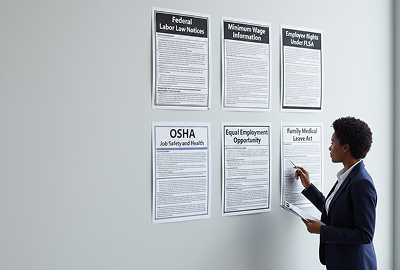
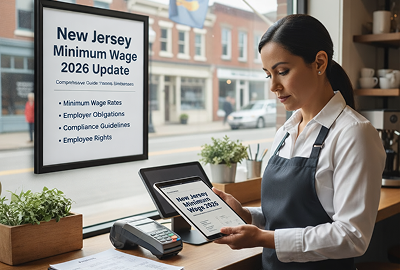
New Jersey business owners generally treat January 1st as a basic administrative checklist. Effective January 1st, 2026, most workers in New Jersey must be paid the minimum wage of $15.92 per hour. But as an employer, if you think you can just update the new $15.92 number into your payroll software, pin a fresh printout to the breakroom, and assume you are compliant for the year, then you are wrong.
Blog
New Jersey Minimum Wage [2026]: Comprehensive Guide
South Dakota Minimum Wage [2026]: Comprehensive Guide
Most South Dakota business owners treat the annual minimum wage adjustment as a simple math problem. You update the payroll software, hang a new poster in the breakroom, and think your business is compliant. But that assumption is exactly where we see teams putting weeks into cleaning up compliance errors.
Vermont Minimum Wage [2026]: Comprehensive Guide
For businesses operating in the State of Vermont, January 1st, 2026, brought another scheduled adjustment to labor costs. The Vermont minimum wage for 2026 is $14.42 per hour, which is $0.41 higher than the previous year. Although a $0.41 increase in the minimum wage rate is not large, the real non-compliance risk lies in the surrounding regulatory framework. Employers in Vermont need to understand the new minimum wage rate and post the latest Vermont labor law poster for compliance. If you try to blend federal standards with state rules, especially regarding the state's unique 50% rule for tipped workers and a sick leave accrual formula that differs from the standard used in almost every other state, you will trigger a legal audit for your business.
Nebraska Minimum Wage [2026]: Comprehensive Guide
In January 2026, Nebraska achieved a significant milestone when the minimum wage of the state was raised to $15.00 an hour; the last step of a phased increase voters passed in November 2022. This is a 67% increase over the base wage of $9.00/hour, which had been held by Nebraska from 2016 until 2022. For employers who experienced minimal change during the preceding years, the new wages represent a very different compliance environment in 2026. Businesses must also ensure that their workplace notices, including the updated Nebraska labor law poster, reflect the new wage requirements.
Montana Minimum Wage [2026]: Comprehensive Guide
Most out-of-state operators see the new minimum wage in Montana for 2026 and assume it’s an easy administrative update. But the reality is that there are several areas of law that employers must comply with. The real issue isn’t the base rate; it’s the strict prohibition on tip credits, the strictly enforced final paycheck deadlines, and a mostly misunderstood small-business revenue exemption. Effective in January 2026, the Montana minimum wage is $10.85 per hour under the State’s Cost of Living Adjustment Law (Mont. Code Ann. § 39-3-409). This law will require changes to payroll processes, including employee wage calculations, overtime calculations, and proper employee classification. Every employer in Montana must comply with the State’s overtime laws and minimum wage requirements.
Ohio Labor Laws [2026]: Comprehensive Guide for Employers and HR
Ohio labor laws set out rules on pay, workplace safety, and employee protections that often go beyond federal requirements, covering wages, workplace safety, and employee rights for virtually all employers in the state. These laws are enforced by the state agencies, primarily the Ohio Department of Commerce and its Division of Industrial Compliance.
Labor Law Poster Requirements for Employers: What You Must Post to Stay Compliant
Many HR managers assume that buying a laminated labor law poster once a year solves their compliance problem. It doesn't. We’ve seen multi-state retail employers rely on outdated signage in their breakrooms, only to trigger massive fines during a routine Department of Labor (DOL) audit. Labor law compliance is not a set-it-and-forget-it administrative task. It is a mandatory communication channel strictly enforced by federal, state, and local agencies.
California Labor Laws [2026]: Comprehensive Guide for Employers and HR
It is not only that the California labor laws are stricter than the federal law, but the thing is, they are enforced differently, too. Keeping your labor law posters and notices updated is the foundation of California compliance in 2026. The state's Private Attorneys General Act (PAGA) allows individual employees the authority that they can file a lawsuit on behalf of all affected employees, which can turn a missed meal break into a seven-figure liability.
Illinois Labor Laws [2026]: Comprehensive Guide for Employers and HR
For Illinois employers in 2026, the biggest compliance risk is not just paying the $15.00 minimum wage. The real issue is the massive gap between federal baselines and local enforcement. Relying on federal guidelines or outdated payroll software is exactly how small businesses trigger devastating audits from the Illinois Department of Labor.
Colorado Labor Laws [2026]: Comprehensive Guide for Employers and HR
Here is something many Colorado employers have learned: state laws are setting a higher bar than federal law. The state laws, such as Colorado Overtime and Minimum Pay Standards Order (COMPS Order), are enforced by the Colorado Department of Labor and Employment (CDLE). In 2023, the CDLE's Division of Labor Standards and Statistics recovered more than $5.4 million in unpaid wages for Colorado workers through its wage complaint process. And we can not say that it is just a hypothetical compliance risk; it’s money that real Colorado businesses had to pay back, plus penalties.